The Three-Layer SEO Stack
The concept of the “Three-Layer SEO Stack” typically refers to the three main categories or pillars of Search Engine Optimisation that must be balanced for a successful strategy.
1️⃣ Why SEO Still Matters (And Why It’s a Living System)
Conversation volume: About 1 million Google searches happen every second.
First‑impression economics: 95 % of users never leave the first page.
Business lift: Strong SEO cuts CAC, raises lifetime value, and fuels data‑driven growth.
SEO isn’t a bolt‑on tweak; it’s a perpetual feedback loop. The fastest‑growing blogs treat it as a *“living concrete.”* It hardens into a firm base, but you keep flexing it to stay sharp. In practice, you’ll find this works best when organizing efforts using what’s known as the three-layer structure in SEO—the Stack approach.
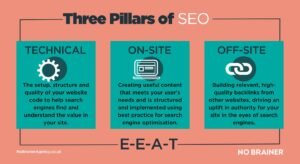
2️⃣ The Three-Layer SEO Stack
Think of it like a layer cake where each level supports the next. When structuring your approach, the Stack’s three layers in SEO help clarify what needs focus.
| Layer | Core Functions | Why It Matters |
|---|---|---|
| Technical Setup Site architecture, crawlability, speed, mobile‑first, HTTPS, schema | Lets robots index you; any glitch hides even the best gems. | |
| On‑Page Optimization Keyword mapping, titles, meta, headers, content depth, images, internal links | Signals relevance to engines—and to readers. | |
| Off‑Page Authority Backlinks, guest posts, social signals, local listings | Shows the outside world that you’re trustworthy – that’s how domain authority climbs. |
Dropping a layer leaves a blank spot competitors can exploit.
3️⃣ Foundation Brick: Technical Setup
| ✅ Checklist | Tool / How |
|---|---|
| ✅ HTTPS | Go‑to‑path + .htaccess redirects |
| ✅ Robots.txt | Check no vital pages are blocked |
| ✅ XML Sitemap | Yoast / All‑In‑One SEO |
| ✅ Mobile‑Friendly Test | Google’s Mobile‑Friendly Tool |
| ✅ Page Speed | PageSpeed Insights → “Serve images in Next‑Gen formats” |
| ✅ Structured Data | Schema.org for articles, products, local info |
| ✅ 404 & Broken‑Link Audit | Broken Link Checker (Chrome) |
Tip: Treat the sitemap and robots file as a “service‑level agreement” with Google. A missing piece can slide you 5–10 spots down the rankings instantly. This is often regarded as the base in The Three-Layer SEO Stack concept.
4️⃣ The Signal Throw: On‑Page Optimization
4.1 Keyword Research – Your North Star
| Step | Action | Tool |
|---|---|---|
| 1. Brainstorm | Draft 10–15 seed terms that fit your niche | Google Search Bar (autocomplete) |
| 2. Expand | Grab long‑tail variations (at least 3–5 words) | Google Trends, KeywordTool.io, Ahrefs Keywords Explorer |
| 3. Validate Intent | Spot if people are searching to buy, learn, or navigate | Scan SERP + “People also ask” |
| 4. Map & Prioritize | Assign keyword clusters to pages | Airtable or Notion |
Rule: Slip the core keyword early—within the first 150 characters—and sprinkle it naturally in 2–3 sub‑headings. By doing so, you integrate the foundational thinking behind a three-layer SEO stack.
4.2 Title & Meta – The First Impression
| Element | Best Practice | Keyword Placement |
|---|---|---|
| Title Tag | 50–60 chars, hook + keyword front | Yes |
| Meta Description | 120–160 chars, CTA, keyword somewhere | Yes (secondary) |
| URL Slug | Hyphen‑separated, no stop words | Yes (prefix) |
Tool: SERP Snippet Preview (Yoast, Rank Math) — these are invaluable at every level of your Three-Layer approach to SEO.
4.3 Content Depth & Structure
| Question | Answer |
|---|---|
| How deep? | 1,200–2,000 words for pillar posts; 500–800 words for quick wins. |
| How structured? | H1 → H2 → H3 → bullet points → FAQ section. |
| What about keyword density? | 0.5–3 % – keep it natural and helpful. |
4.4 Images, Alt Text & Compression
| ✅ Item | Why It Matters |
|---|---|
| Alt Text | Supports accessibility and image rankings. |
| File Naming | Descriptive (e.g., “best-coffee-maker-2025.jpg”) |
| Compression | TinyPNG or ImageOptim shrink size by 50‑70 %. |
Pro tip: Use srcset to serve responsive images that flop over smoothly on mobile. Each image must align with the multi-layered SEO stack for best effect.
4.5 Internal Linking Engine
| Principle | How |
|---|---|
| Contextual Linking | 3–5 links per 1,200‑word page pointing to core content. |
| Orphan Prevention | Every page should gain 2–3 incoming links. |
| Hierarchy | Build a silo: Main pillar → cluster posts → micro‑content. |
Check: Run Screaming Frog to get a link‑depth map—effectively mapping every layer in your SEO stack.
5️⃣ Authority Building: The Off‑Page Layer
5.1 Link Building Routes
| Route | Approach | Quick Win |
|---|---|---|
| Guest Posting | Pitch niche blogs. | 1 backlink + referral traffic |
| Industry Directories | Submit a profile with bio + link. | 1–2 links, high niche relevance |
| Link‑Exchange Groups | Join reputable groups; skip spam. | 1 link per 3 pages after vetting |
Guest Post Outreach Checklist
1. Spot 5–10 relevant blogs—this helps build the off-page layer of your three-layer SEO stack.
2. Personalize the email—show you’ve read their content.
3. Propose 3 fresh topic ideas that hit their audience.
4. Offer a one‑of‑a‑kind angle (case study, data, infographic).
5. Follow up after a week.
5.2 Local SEO (If applicable)
| Step | How |
|---|---|
| Google Business Profile | Verify, polish description, add photos. |
| Local Keywords | “Coffee shop in Austin” → <h2> + content. |
| Citations | List in the top 10 local directories. |
| Reviews | Ask satisfied customers for reviews; reply publicly. |
6️⃣ Measurement & Iteration – The Dashboard
| Metric | Tool | Why It Matters |
|---|---|---|
| Impressions | Google Search Console | Gauges visibility. |
| CTR | Search Console | Shows how compelling your title/meta is. |
| Average Position | Search Console + Ahrefs | Tracks climbing or slipping. |
| Organic Sessions | GA | Direct traffic to your site. |
| Bounce Rate / Avg. Session Duration | GA | UX health, content relevance. |
| Backlink Growth | Ahrefs / Majestic | Authority momentum. |
Routine: Dive into these numbers twice a month, tweak where trends flag issues, and store a simple spreadsheet to contrast 30‑day snapshots; these metrics are essential for evaluating your Three-Layer Stack SEO progress.
7️⃣ 30‑Day SEO Sprint Cheat‑Sheet
| Day | Action |
|---|---|
| 1‑3 | Technical audit with Screaming Frog. Fix SSL, robots.txt, sitemap. |
| 4‑5 | Page speed audit; compress images. |
| 6‑8 | Keyword research & mapping. |
| 9‑10 | Rewrite titles/meta for top 10 posts. |
| 11‑12 | Polish on‑page: H1, alt tags, internal links. |
| 13‑15 | Build or refresh pillar content; outline silos. |
| 16‑18 | Reach out to 5 blogs for guest posts. |
| 19 | Submit to 3 local directories (if relevant). |
| 20‑22 | Create an infographic or data visual; share on social & Pinterest. |
| 23‑25 | Scan for 404s; set up clean redirects. |
| 26‑28 | Review first 14‑day data; tweak low‑CTR titles/meta. |
| 29‑30 | Export everything to Google Sheet; lock KPIs for next sprint. |
Download your free “30‑Day SEO Sprint Sheet” here (link). (Replace with a real attachment or downloadable URL.) A handy reference to The Three-Layer SEO Stack can guide daily tasks.
8️⃣ How to Keep the Momentum
1. Content Calendar – 2–3 posts a month (H1 pillars + micro‑posts). Each post should reflect principles from the SEO stack’s three layers.
2. Monthly Link Audit – Re‑evaluate the health of backlinks.
3. Quarterly Technical Refresh – Update schema, revisit sitemap.
4. User Feedback Loop – Add a short survey after top posts to capture real intent, always refining your SEO efforts according to the Stack framework.
9️⃣ Wrap‑Up: Your SEO Playbook Recap
| Layer | Key Deliverable | Success Indicator |
|---|---|---|
| Technical | Crawl‑ready, fast, mobile‑native site | No unhappy robots, PageSpeed < 3 s |
| On‑Page | Keyword‑centered content, clean URLs, solid internal linking | 2–3 clicks from SERP, CTR > 3 % |
| Off‑Page | 5‑10 high‑authority backlinks, local citations | Domain Authority rises + traffic bump |
| Measurement | Steady growth in impressions, CTR, organic sessions | > 10 % traffic lift month‑on‑month |
Remember: SEO is a marathon, not a sprint. Use this scaffold, keep iterating, and let the numbers guide the next tweak, always bearing in mind the value of a three-layer methodology for SEO.
- Unlock the power of The Three-Layer SEO Stack for effective technical setup, on-page, and off-page optimization.